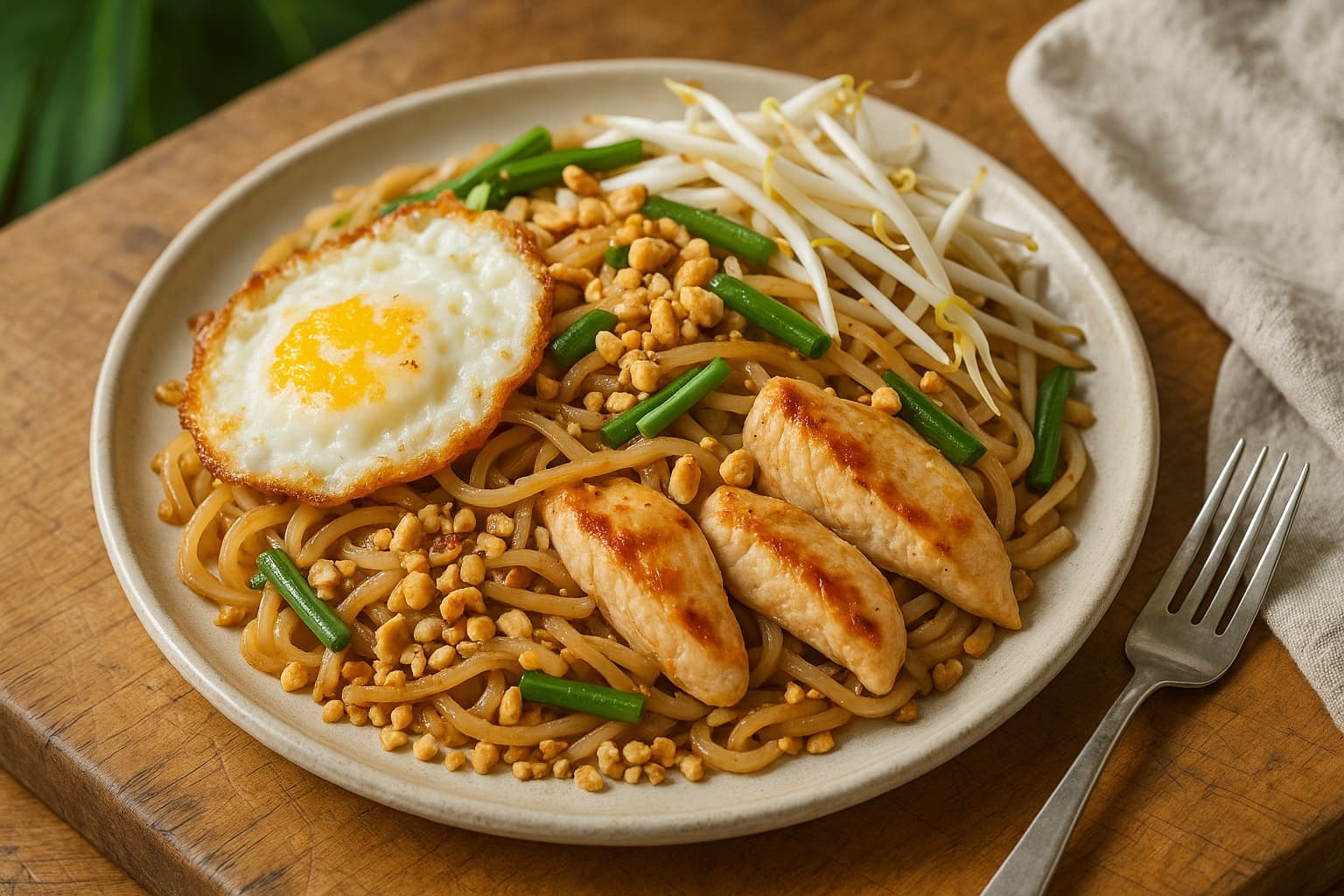
Chicken Pad Thai
Nutrition Facts
620
Calories
36g
Protein
66g
Carbs
27g
Fat
Nutrition data sourced from USDA FoodData Central
Let's Cook
- Prepare the ingredients5 min
Start by gathering all your ingredients to streamline the cooking process. Slice 1 lb chicken breast into thin strips, ensuring they are uniform for even cooking. Cook the chicken until it reaches an internal temperature of 165°F (74°C). Measure out 8 oz rice noodles and set them aside. Beat 2 pieces egg in a small bowl, and slice 4 pieces green onions into thin rings. Lastly, chop 0.5 cup peanuts for topping. Having everything ready will make your cooking experience enjoyable and efficient.
Firm the chicken in the freezer 15 minutes before slicing — cold meat holds its shape for thin, even strips. Cut across the grain so they stay tender through the fast, high-heat stir-fry.
- Cook the rice noodles8 min
In a large pot, bring water to a rolling boil over high heat. Once boiling, add the 8 oz rice noodles and cook according to the package instructions, usually around 6 to 8 minutes, or until they reach al dente. Stir occasionally to prevent sticking. Once cooked, drain the noodles in a colander and rinse them under cold water to stop the cooking process. This helps maintain their texture and prevents clumping, which is key for a great Pad Thai. Set the noodles aside for later.
Keep an eye on the noodles; overcooking can lead to mushy texture.
- Sear the chicken7 min
Heat a large (12-inch) skillet over medium heat. Once hot, season the sliced chicken breast with salt and white pepper on both sides. Add the chicken in a single layer. Cook for about 5 to 7 minutes, stirring occasionally, until it reaches an internal temperature of 165°F (74°C) and is no longer pink in the center. Pat the chicken dry before adding it to the skillet — this helps achieve a golden sear instead of steaming. Once done, remove the chicken from the skillet and set it aside. This step builds a flavorful base for your Pad Thai.
- Scramble the eggs3 min
With the chicken pushed to one side of the skillet, pour the beaten eggs into the empty space. Allow them to cook undisturbed for about 30 seconds until they start to set. Then, gently scramble the eggs with a spatula until just set, about 1 to 2 minutes. Mixing the eggs with the chicken enhances the dish's flavor and texture, providing richness to the Pad Thai. Make sure the chicken reaches an internal temperature of 165°F (74°C) and not to overcook the eggs; they should be soft and creamy.
If the eggs start to brown, reduce the heat immediately to keep them tender.
- Combine all ingredients5 min
Add the drained rice noodles, 3 tbsp fish sauce, 1 cup bean sprouts, 0.5 tsp red pepper flakes, and sliced green onions to the skillet. Gently toss everything together using tongs or a large spatula, ensuring the noodles are evenly coated with sauce and heated through. This should take about 3 to 5 minutes. Taste and adjust seasoning with salt and white pepper as needed. Meanwhile, cook the chicken breast separately until it reaches an internal temperature of 165°F (74°C) for food safety. The goal is to warm the noodles and vegetables without overcooking them, keeping everything vibrant and fresh for a delicious finish.
- Plate the Chicken Pad Thai5 min
Once everything is well combined and heated, remove the skillet from the heat. Serve the Chicken Pad Thai immediately on plates or in bowls. Garnish with lime wedges and generously sprinkle the chopped peanuts on top for added crunch and flavor. The fresh lime juice will elevate the dish, bringing brightness to the rich flavors of the Pad Thai. Enjoy your homemade Thai meal!
Three dinners, every Sunday
One short email a week with three recipes worth cooking. No meal plans to keep up with.