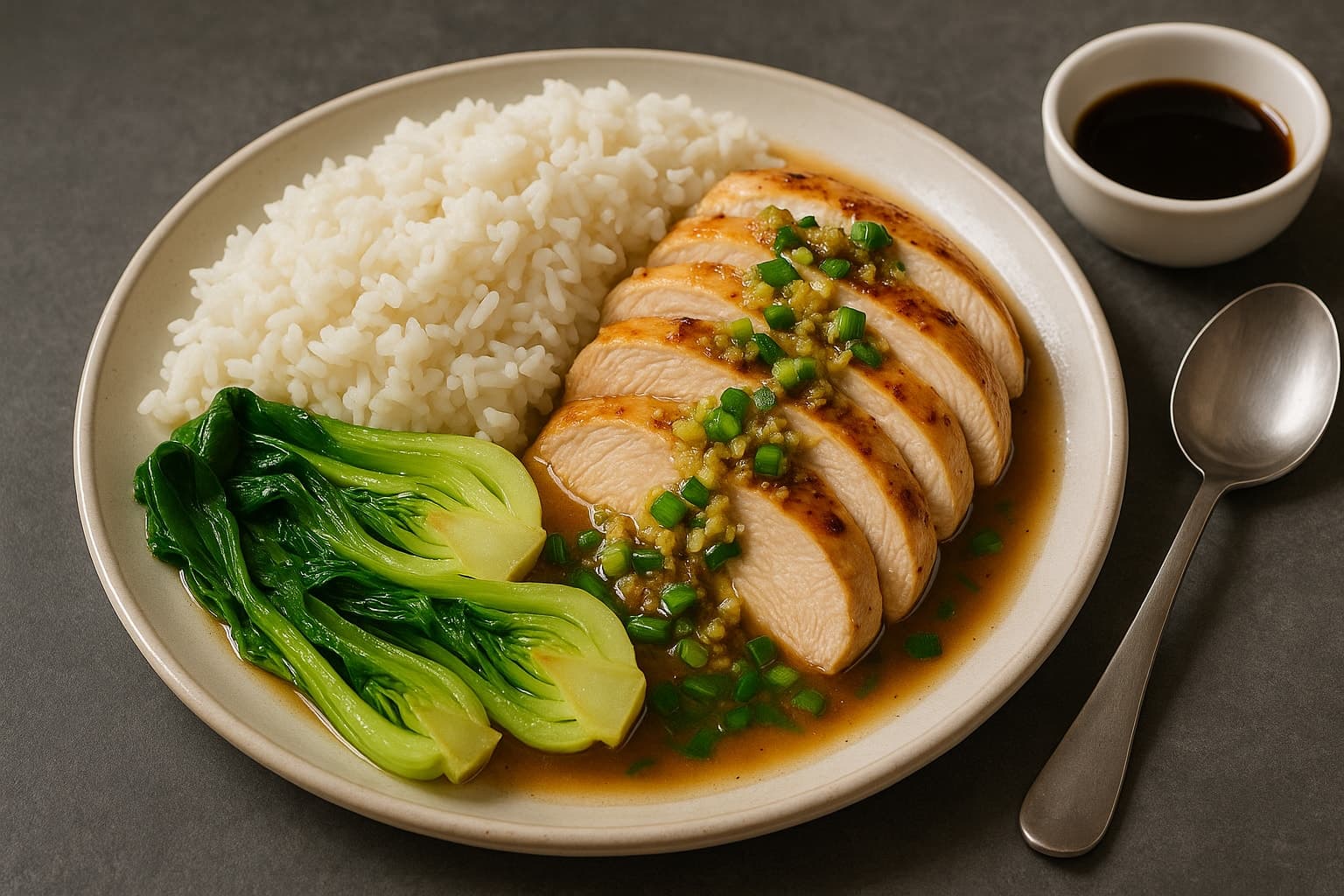
Ginger-Scallion Poached Chicken with Steamed Bok Choy and Rice
Nutrition Facts
344
Calories
40.1g
Protein
66.1g
Carbs
7.4g
Fat
Nutrition data sourced from USDA FoodData Central
Let's Cook
- Step 115 min
Start the rice, because it takes the longest to sit still. Combine the rinsed rice with 1½ cups water and a pinch of salt in a small pot and bring it to a boil uncovered — you'll hear it and see hard bubbling at the edges. Cover, turn the heat to its lowest setting, and leave it for about 15 minutes. It's done when no water pools on top and the surface is pocked with small craters. Pull it off the heat with the lid on until you need it.
Don't lift the lid during those 15 minutes; the trapped steam is what cooks the rice. If you smell toast, pull the pot off the burner right away and leave it covered.
- Step 2
In a wide pot or deep skillet, put the broth together with the ginger coins, the scallion whites, the smashed garlic and ½ teaspoon salt. Bring it up until steam rises and small bubbles break around the rim, then taste it. It should taste like a mild, gingery soup you'd drink from a mug — if it tastes like water, add another pinch of salt.
- Step 318 min
Slide the chicken breasts in so they lie flat in one layer, adding a splash of water if the liquid doesn't cover them. Turn the heat down until the surface is almost still, with maybe one bubble rising every few seconds. Cook uncovered until an instant-read thermometer pushed into the thickest part reads 165°F (74°C), 15 to 18 minutes depending on how thick the breasts are.
No thermometer? Cut into the thickest breast at 15 minutes. It should be opaque throughout with clear juices. Any pink or cloudy liquid means two more minutes in the broth.
- Step 45 min
Lift the chicken onto a cutting board and leave it there for 5 minutes. Meanwhile, lay the bok choy halves cut-side down in the broth, cover the pot, and cook 3 to 4 minutes. They're ready when a knife tip slips into the white stem with no resistance and the leaves have gone bright green and slumped.
Resting isn't optional. Slice straight from the pot and the juice runs out onto the board instead of staying in the meat.
- Step 5
Move the bok choy to a plate, then fish out the aromatics with a slotted spoon and discard them. Stir in the soy sauce and the rice vinegar, then the sesame oil. Taste again: it should be savory with a faint tang. Add salt if it reads flat.
- Step 6
Slice the chicken across the grain into finger-thick pieces — the cut face should look opaque and slightly glossy. Spoon rice into four bowls, add chicken and half a head of bok choy to each, then ladle over enough hot broth to pool around the rice. Finish with the sliced scallion greens.
Across the grain means cutting perpendicular to the fine lines running down the breast. It shortens the fibers so each slice pulls apart easily.
Three dinners, every Sunday
One short email a week with three recipes worth cooking. No meal plans to keep up with.